From Micromanaging to Empowerment | Alinnette Casiano
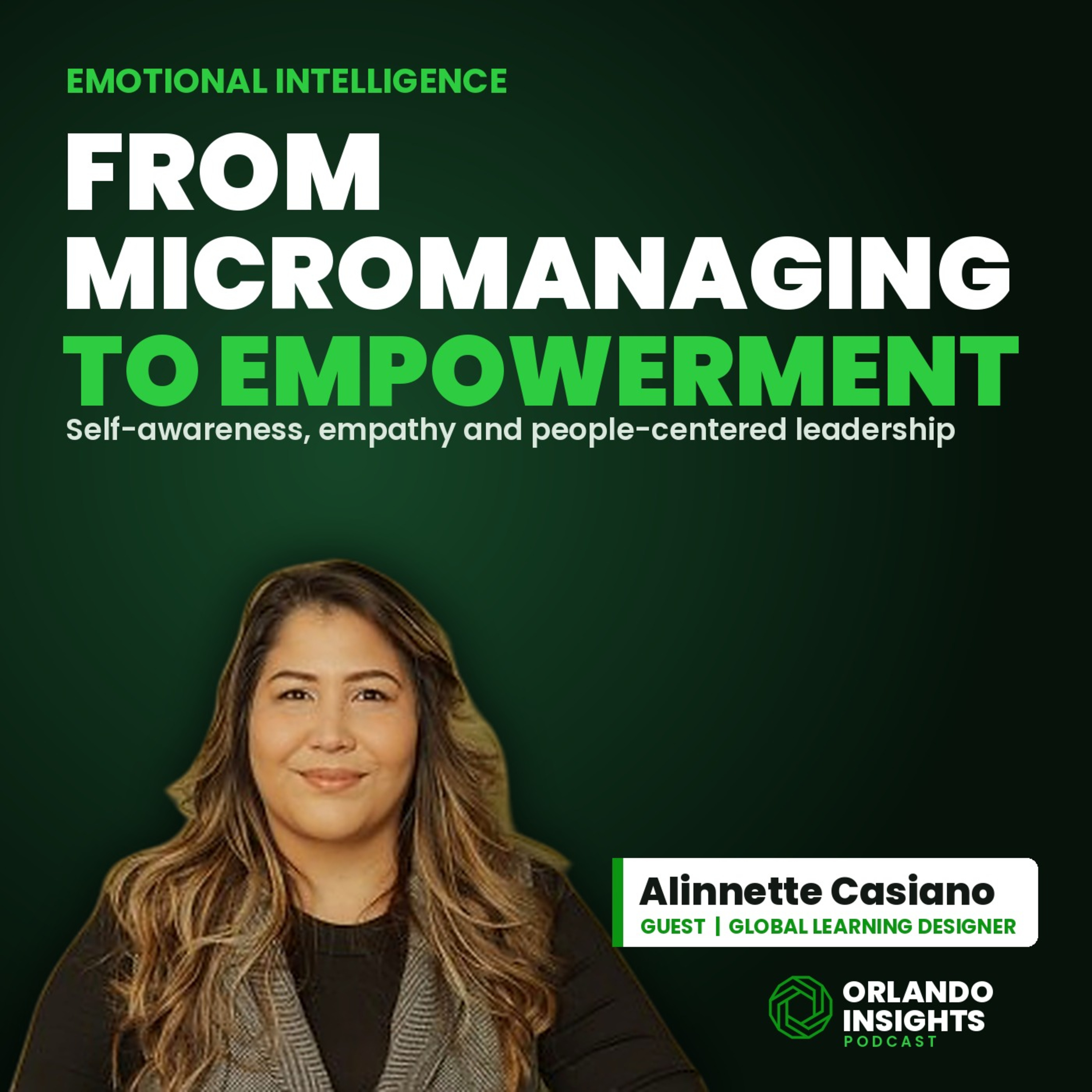
How do you stop micromanaging and start empowering your team? Global learning designer Alinnette Casiano tells host Erin Moody how she moved from micromanaging to trusting her team, and why self-awareness is the foundation of leadership.
Who it's for: Managers and team leads who want to stop micromanaging and build trust.
In this episode you'll learn:
- How to move from micromanaging to empowering a team
- Why self-awareness is the foundation of leadership
- Simple ways to check in with yourself
- Why to listen before assuming resistance
- How to design learning around the learner's experience
Alinnette also covers simple ways to check in with yourself, listening before assuming resistance, knowing when something no longer fits, and designing learning around the learner's experience.
Chapters
0:00 Welcome and introduction
1:58 From micromanaging to empowering her team
5:55 Self-awareness as the foundation of leadership
9:19 Ways to check in with yourself
11:38 Listening before assuming resistance
13:20 Recognizing when something no longer fits
16:53 Pivoting after a decade in one career
20:22 Learning from feedback and setbacks
24:10 Designing learning around the learner's experience
25:51 Culture, empathy and clear learning design
27:51 Where to find Alinnette
More episodes: https://orlandoinsightspodcast.com
Guest: Alinnette Casiano, global learning designer
Hosted by Erin Moody for Orlando Insight Group. Henry Clavo, Founder & CEO: https://www.linkedin.com/in/henryorlandoclavo/
The Orlando Insights Podcast is brought to you by Orlando Insight Group, data and AI advisory for CIOs and Chief Data Officers: AI Readiness Assessment, Data Governance & AI Foundations Sprint, and Fractional Chief Data & AI Officer. Book a free 30-minute AI readiness consult: https://calendar.app.google/xkJqUsFzrHAVkY4W7
https://orlandoinsightgroup.com
#Leadership #SelfAwareness #OrlandoInsightsPodcast
Transcribed automatically by PodView
Hi, everyone, and welcome. I am your host, Erin Moody, here on behalf of Orlando Insight Group. For each of our episodes, we dive into real conversations with technology leaders, innovators, and experts who are shaping the future of IT, data, and cybersecurity. Our goal is simple, to give you practical insights, real-world strategies, and expert perspectives that you can use to drive smarter business decisions and hopefully learn something. So thank you so much for tuning in, and I'll just jump right in and introduce our guest for today.
Her name is Alannette Cassiano, and she is a leadership strategist, global learning designer, and passionate advocate for emotional intelligence at work. She's a bestselling author, a doctoral candidate, and somebody who isn't afraid to talk about the messy middle of growth. Whether she's designing training experiences across cultures or helping leaders build more self-aware teams, she brings both heart and strategy to the table. And I am so excited to dive into this conversation with her today and learn all kinds of new stuff from her.
Thank you so much, Erin, for having me. I'm excited, too, for our conversation today. Thank you for the invitation. Yeah, of course, of course. So we'll just kind of jump right in. So in kind of doing some research about you, I see that you shared that your leadership style has evolved from micromanagement, which we all don't like, to empowerment using what you call no check days as a key tool. So could you talk to us a little bit about what a no check day is and how you made that transition? Because I do think a lot of managers struggle with maybe accidentally being micromanagers.
So kind of talk to us about what you've learned and how you've made the change. So at first I micromanaged because I didn't want to be seen as a weak leader. because culturally we're kind of like shaped into the leader has to have this authority, right? We are one way or the other. I thought being involved in everything meant that I was being responsible, that I was demonstrating that authority. But over time, I realized that I wasn't giving my team the space to lead themselves. Because a leader always has to have in mind how I uplift others, how I develop others.
And leaders should shape other leaders, right? Right. So I realized that it wasn't working. People felt disengaged. And I thought that, okay, let me shift that to empowering instead. How do I think best team will feel engaged and motivated and just have freedom to be themselves at work? Right. El Michi was that one experiment. I stopped checking in for a full day. No sluggings, no status updates, just space. And guess what? Everything kept moving. it didn't need me as much and I was just there as support and and being the number one cheerleader for my team and that's when I realized leadership is in control we have to learn to release and let people just develop in in the real world right yeah I love that and um it kudos to you for having the self-awareness to realize that things weren't working with micromanagement.
Because I think sometimes leaders double down on it. If they're having issues, they're like, oh, I need to check in even more. But I think people like to have that autonomy. So they want you there, obviously, if they run into issues and they need that support. But typically, we hire people that are experts at what they do. So I'd love to hear a leader allowing people to do that. How did the team take it? Was it like surprised with the changes or were they just kind of like, oh, okay, this is awesome.
They took it really well. And in the one-on-ones, I was able to actually get some positive feedback. Oh, because we didn't have to do the updates or check in. I was able to get this done earlier than expected. So it's a both win in terms of time and in terms of the way that others are developing that comes through their assigned responsibilities. So they're able to feel free and they're able to do that motivated as well. Yeah, that's a great point because, you know, I've been a manager before. Like you have to know what's going on because you might get questions from senior leaders and things like that.
But you definitely have to be able to balance that with giving the team enough time to do what they're supposed to do. So awesome. Well, great job. And I'm glad that they were excited to have that time back. All right. Perfect. So you one of the other things that you talk about a lot is self-awareness, which we just kind of highlighted before. And it's a skill, not just a trait. So that means that we can learn it, right? We're not, I mean, some people might be born with a higher level of it, but we can all learn to be more self-aware.
What kind of practices do you do that help you stay aligned as a leader and encourage your team to do the same with that kind of self-awareness in mind? self-awareness is a process of reflection that we do for ourselves so we need time to do that we need to set aside some time to reflect and how are we feeling what are we thinking what are we what do we want to get the most out of this day or what do we got out of in the end of the week from this week. So self-awareness is very linked to reflection and then self-reflection and maybe writing.
It's a good way I encourage because it has helped me, but there are other ways too. Just taking a 10 minute walk and just reflecting on how are we feeling? And then why are we feeling this way? And then just let emotions marinate and thoughts maybe give space in between thoughts because we are always very tied to the grain to the hustle to the productivity But we need to be grounded and balance ourselves in order to do everything else So I think self is the foundation of it all. And that honesty that we have with ourselves is going to help us be our best.
And then our talents flow better, the way that we manage difficult situations, the way that we celebrate is not always the negative, the way that we celebrate life, responsibilities, milestones. So I think self-awareness has changed my life as a person, as a leader, as a mother. And I think those are the ways that I always encourage that reflection time that breaks in between high stake meetings and the retrospecting that works really, really well. Yeah, I think you, you highlighted something super important there about us always being like, go, go, go.
And if you're just always moving from one task to the next, and you don't take, you know, even if it's five minutes, like just a breather to check in with yourself, you may miss something, you may just go down the road. And then all of a sudden, you know, a lot of us have hit like that burnout stage. But if you are checking in with yourself, like you said, like, what are the emotions I'm feeling, first of all, then why am I feeling and then you kind of dig into that. And then as you do that, you might catch something that's making you maybe unhappy or anxious.
You can change sooner rather than later. So you don't end up in a negative spiral. So, yeah, I love I've heard a lot about that, like some people journal, some people like to go for walks. I've done both. It depends on how I'm feeling, I think, on which one works better for me. But both are are equally helpful when you're you're trying to check in. Reading exercises, meditation. Yes, absolutely. To instrumental music, just, you know, all of those options to set aside that time because it's a habit we have.
Yeah, absolutely. All right. So kind of jumping into a similar type of question. One of the things that you emphasize is that emotional intelligence is better or not better, but more important than IQ. So could you talk a little bit about maybe an example that you've had where leading with empathy helped change the outcome of a situation and how that worked out for you? There was a time about we were in the middle of a cross-functional project and someone from the other team kept pushing back hard.
My first instinct was frustration. Right. Understandably. But instead of reacting, we need to set aside that time for self-awareness and reflection. Wait. In that pause, in that thought that I'm going to assume good intent, there's power. Right. Well, then I set aside the person and I asked directly, can I go, can I ask how are you doing? What's going on behind the scenes? Is everything right? And she wasn't being difficult. She was burned out. Oh yeah. Okay. Managing a sick parent and felt like no one was listening.
Right. Just holding space for listening shifted the entire tone of the conversation. We build better plans together. And that moment just reminded me before assuming resistance, check for real life weight. I think that's why I'm so passionate about people-centered leadership. We have to care about the people that's behind the responsibility that they're carrying. So that assumed good intent thought, it's always a powerful tool. And it goes more farther than IQ because the frustration kicks in. The why, this is not shaping to be the way I expected or that it should be on paper.
Right. Yeah. The should is when I think we all deal with, but that's a great example that we could all use. I think the automatic feeling a lot of times when we run up in frustrating things like that is to assume, oh, like they're out to get me or like you said, like a negative intent, but pausing for a moment and saying, okay, well, what if it's not that? And let's assume that there's something going on. And just like with what you did, we never know necessarily what's going on with people unless we ask.
So I think coming at it from that empathetic threshold is like exactly what helps people. They want to be seen. They want to know that people care. And I think that probably went a really long way with that person. Very cool.
Yeah. And another thing that I read that you've written that I was interested about is something that you call strategic quitting. And that along the lines of kind of that self-awareness is recognizing when something no longer serves you. So I can definitely relate to that big time. And I wanted to ask you if you could talk to us about one of the hardest enough lines that you had to draw in your own career and kind of talk to us about the details. I just posted recently about that with my LinkedIn and it was my career in public education.
I've done a lot of, I have had a lot of great experiences throughout my career, but public education was a huge part because I thought I was just born to do that. That was like, that was like the highest in my mind that I could go. But when something no longer feels safe because it doesn't feel right, I think something that I've discovered along is that uncomfortable feeling. You know, when you're shopping and you try on clothes and they don't just, they just don't fit. So there comes times in our lives that we have to recognize that what doesn't feel safe, doesn feel right Like it doesn fit It uncomfortable Um and there no way around it You try to try to make it fit but it doesn fit So the rhythm feels weird Right So it just you have to recognize that it just not for you anymore.
And it's okay because sometimes we're so tied to what it should be and we don't give space to what it could be. And then I started looking for challenges. Like I have a master's in curriculum. So that was my interest. Wait, I do have this expertise. Let me use it for something else and started looking, what else can I do that could light up my passion again? And I feel like there's hope and there's meaning behind what I'm doing every day because our careers are just as important as our personal lives and the persons that we are behind the job, right?
Right. So when you outgrow, I think that's the factor. You outgrow. It doesn't fit the size anymore. That one decision made space for everything I've built since. Like I've been able, I founded a company. I've been developing a lot of other behind the scenes projects. I've been able to have so many great opportunities from the, from the, for whatever came after the decision that I made to just do that pivot and be courageous. Take on the bravery. It's going to be okay. Yes. And I'm glad you said that.
It does take a lot of courage. especially if you've invested a lot of time into something. So I know I've, over my career, talked to people that, you know, they've kind of been doing something for a decade, a decade plus, and they're maybe not even burnt out, but they're just bored and it's just not lighting them up anymore. It's not exciting them. And it's hard to pivot, but just like your example, there's always different connectors. So just because you've been doing something for a really long time, that doesn't mean you have to do it forever.
You could think about, you know, maybe what's something that I can do that this skill set would be beneficial for. Similar to yourself, I went to college to be a teacher and I had that aha moment before you. I never actually taught because in my senior year, I was like, I can't do this. But when I sat down and thought about all the things I learned in my degree, I kind of went into HR and recruiting. So it's like, you're, you're still dealing with people, you're teaching people, it's just adults, more so than children, and they have their different levels of challenge.
But there's always things that are cross-functional. So don't think that you're stuck. You definitely have transferable skill sets. And I think we're going to see a lot of that changing and people having to think about that with AI, because we know it's already disrupting things. So I definitely think that's a very timely topic that we're kind of going at there. And you have a great example. Like you said, it's letting go of that one thing has made space for so many other cool things that you wouldn't have done if you were still teaching.
So have the courage, like Eleanor said. That bravery. That bravery, yes. So speaking of bravery, one thing that most people don't like is failure. And one of the things that you do is you frame failure as feedback and not a final result, which I think is so powerful and something that a lot of us could learn from. So I was curious if you had maybe a failure story that you could talk to us about that maybe ended up being a turning point for you. Oh, my God. So I love teaching. It's always in my heart.
And at every age, not just children, adults, I love passing on important information in crucial moments of a person's development. So I love teaching. So I do love to do workshops and training. That's something that I enjoy. The prep, the delivery. And then this was one time when I was starting my consulting. And I gave a workshop that bombed. Oh, no.
I felt this silent in the room. And I felt defeated. Like, how is it that this happened? Right. But it's okay because I assume you would intend. Like, I'm open to that feedback. If something didn't work and the best resource that we could have is the people that were delivering, whatever we were delivering, right? So there are best sorts of information. So I'm open to learning what is it that they have to say? I really want to know. So the thing is, I designed for my style, not the audience. So I didn't pause or did my research maybe more deeper for that audience, what mattered to them, what format was going to land best.
we do have to be very aligned to the audience and what we're delivering what we're giving them what we're offering that is very aligned to their interest right but then after many years i thought i had it all figured out oh my god i'm a visual learner i'm auditory this is going to be great and then after that I redesigned my whole approach so it was failure because the people were not engaged I have to say it was it was utterly failure so um yes so I did an entire new session from what what I the feedback that I received and it was well received that second on a time, but, you know, that shouldn't have been happening, but I learned from it.
And I think being humble into, we don't know everything. Right. And if we think we know, we always have to be open to what others have to say and the outcome that we're right. Yeah. I think that's a powerful lesson because I think a lot of us probably listening to this are high achievers, overachievers And it tough when you used to things going really well to have those setbacks And sometimes I think we can get defensive and try to blame everyone else because we do see that failure as like you know a personal reflection of who we are.
And with kind of what you've been saying about, you know, it's not like everybody fails. The best, most successful people out there are probably failing 20 times more than the average person. So, but they're doing what you did. They're saying, okay, this didn't work. What can I do to do better? What feedback can I get? What changes can I make? And using it as a learning experience. So I love that. I think it's obviously you, you fixed a lot of things because you're very successful and you're doing a great job.
But yeah, we do have to reframe that and just recognize, okay, it's not a reflection of me. Don't give up after one failed attempt. Use it as a lever to improve and make yourself better. So one of the next things I wanted to ask you, obviously, you've got a lot of stuff going on. So you work in global training, learning and design. You mentioned doing consulting and workshops and all of that cool stuff. So how do you tie all of those threads together to build experiences that are interesting for people to join your workshops and things like that?
Wow, that's a great question. It comes down to what experience would I want people to have? It's not about me. How I'm going to help them grow? How I'm going to be able to create a transformation from point A to point B to bring results? How I'm going to go and do that? What's the experience? So I think whether I'm doing research, teaching, designing a learning product. I'm thinking about the human on the other side and the people that I'm impacting. And I think it lights me up so much because it comes from a place of help.
It's something that I enjoy. I enjoy helping people go past the blockers if they're feeling stuck, how is it that I'm, when I help them and I leave, what I'm leaving them with? That feeling, that transformation. And I think I love the UX. It has been the best experience, the recent one, because it helped me how to listen deeply. it helped me yeah it helped me understand others pain points and work backwards from that global training has taught me how to translate meaning across cultures i've had the privilege to interview people in english in spanish in different areas of the world which has a huge huge blessing to be able to do that.
It's amazing. And then what's the meaning behind the cultures? We have to be very empathetic about that. Right. Not everybody, you know, has the same needs, the way that they struggle, the way that. And then learning on design has taught me to build systems that are clear, that not just clever, because we tend to go to the cleverness side. But we have to narrow it down to clarity. It's amazing how powerful that thought is. Right. Design with the care that we want people to understand. Right. We don't want it.
We don't want any sort of confusion. So I think when I merge everything that I've been doing at the same time, it comes down to those soft skills and how much of a weight it has in everything else. Yeah, that pops up a lot in the conversations that we have with people. Like, obviously, everyone we're talking to is super smart. They have good careers or businesses and things like that. But they also have those soft skills. They have the emotional intelligence, the self-awareness, and the understanding that everything and every experience that you have can teach you something.
So it may not seem like UX has much to do with learning and development, but the way you just talked about it's like, oh, yeah, that makes total sense. So I think that a lot of us could learn from that. And it doesn't have to be, you know, one lane over here and one lane over there. We can pick up on everything and kind of mold all of your experiences together. So very cool. So my last question for you, really, as we're wrapping up, is if people are listening today and they're resonating with you and what you do, what's the best way for them to connect with you?
How can they reach out to you? Of course, I'm always available through LinkedIn slash in, I-N slash Alinet Cassiano altogether. I also have a newsletter. They can sign up and then they'll receive weekly emails. And there's also a link through Hubble. I'm an advisor through that platform. Just go to my profile and you'll get access to all of that in my feature section. And if I can't answer right away through the DMs, give me a little bit of time. I'll get back to you. Perfect. Patience is key. All right.
That's great. And we will link Alana's LinkedIn profile as well. So you should just be able to click on the invite and it'll take you to her page. So make sure you follow her and check out those links that she mentioned. All right. Well, thank you so much for joining us today. It was a great conversation. I loved learning all about who you are and what you do. Very, very cool stuff. So thank you again for for taking the time out to chat with us. Thank you, Erin. You're so welcome. All right, everyone.
Well, that's it for today. Thank you so much for hanging out with us. And if you enjoyed our conversation, definitely make sure that you follow our company page at Orlando Insight Group. We're always sharing when we are doing events like this. So make sure you follow us there and we will see you next week. All right. Bye.
you
 Apple Podcasts
 Castbox
 Castro
 Goodpods
 Moon FM
 Overcast
 Pocket Casts
 Podbean
 Podcast Addict
 Podcast Republic
 Spotify