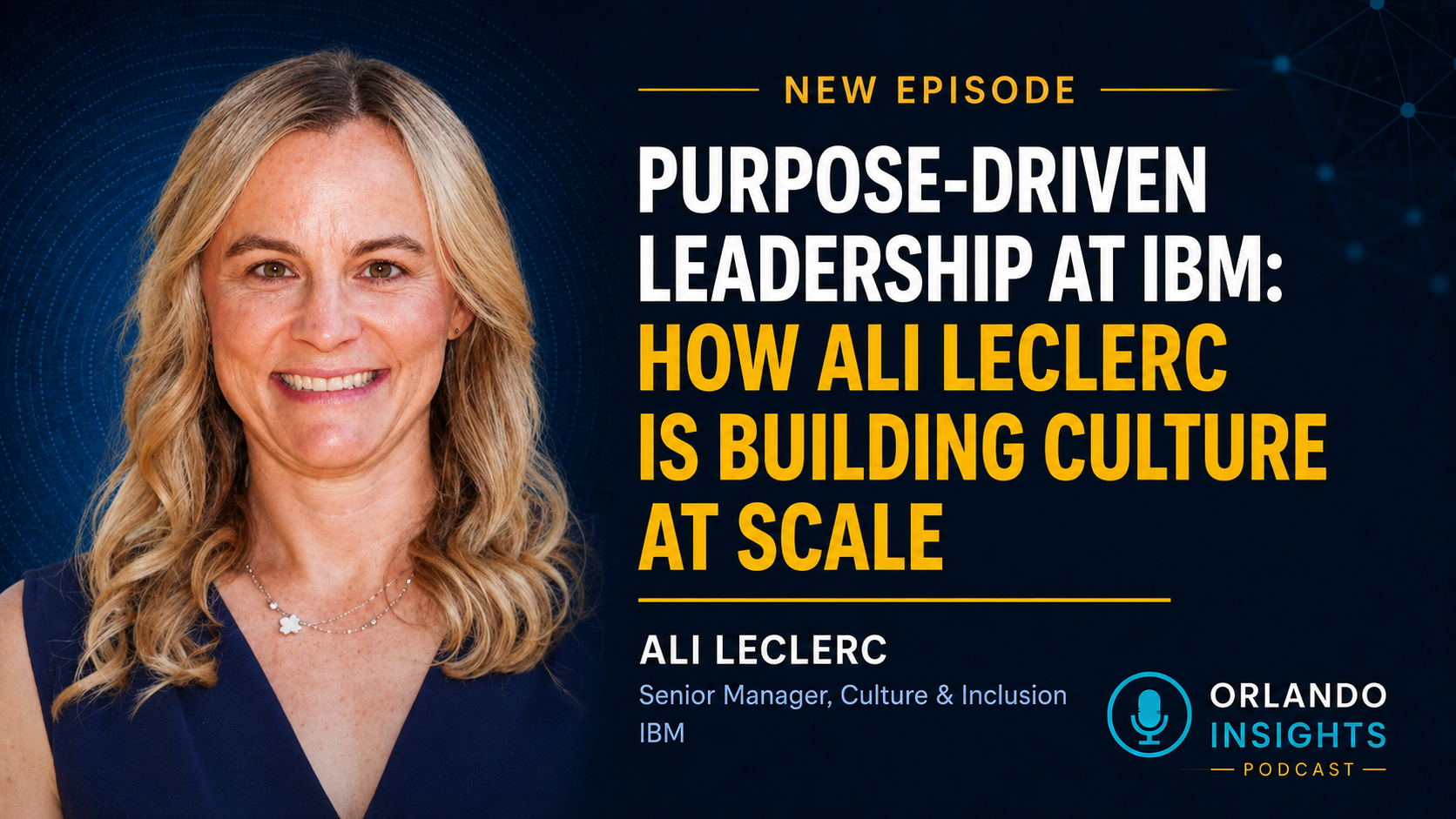
Purpose-Driven Leadership at IBM: How Ali LeClerc is Building Culture at Scale
Related Episode
Open Source at IBM: Community, Data and AI | Ali LeClercThe Challenge of Leading with Purpose at Scale
When you think of IBM, you might picture decades of computing history, innovation, and massive organizational complexity. But what does it actually mean to lead with purpose inside a company that size? That’s the question we explored in our latest conversation with Ali LeClerc, who’s navigating the intricate world of leadership at IBM while staying grounded in what really matters.
The truth is, purpose-driven leadership sounds great in theory. But when you’re working within a global organization with thousands of employees spread across continents, with legacy systems, competing priorities, and the weight of corporate history on your shoulders? That’s where things get real.
Ali brings a refreshingly honest perspective to this challenge. She doesn’t pretend that building culture at scale is simple or straightforward. Instead, she’s figured out how to make it meaningful, authentic, and actually achievable—even in an environment as complex as IBM.
Storytelling as a Leadership Tool
One of the most compelling insights from our conversation centers on storytelling as a core leadership competency. In a world drowning in data, dashboards, and metrics, stories are what actually connect people to purpose.
Ali emphasized how she uses storytelling to bridge the gap between corporate strategy and individual employee experience. When you’re trying to inspire thousands of people to rally around a common vision, telling them about quarterly targets and market positioning only gets you so far. But tell them a story about how their work is changing someone’s life? That sticks.
This is particularly relevant in the tech industry, where we’re often so focused on the “what” and the “how” that we forget the “why.” Purpose-driven leadership brings that “why” front and center. It’s about helping people understand that their contribution—whether they’re writing code, managing infrastructure, or leading teams—is part of something bigger.
The beauty of this approach is that it works at every level of the organization. From individual contributors to executive leadership, people respond to narratives that help them see meaning in their work.
Building Authentic Culture in a Global Organization
IBM is a company with over a century of history and presence in virtually every major market worldwide. Building culture at that scale could easily become a corporate exercise in checking boxes—mandatory training modules, glossy internal communications, the usual corporate culture initiatives.
But Ali’s approach is different. She’s focused on creating conditions where authentic culture can actually emerge and flourish. This means:
Creating psychological safety where people feel comfortable being themselves and taking thoughtful risks. In a company as large and established as IBM, this might seem counterintuitive, but it’s essential for innovation and employee engagement.
Listening more than talking. Real culture-building isn’t about top-down mandates. It’s about understanding what your people actually care about, what challenges they face, and what would make their work lives better and more meaningful.
Connecting individual purpose to organizational purpose. This is where the real magic happens. When someone can clearly see how their personal values and goals align with the company’s mission, engagement and retention naturally improve.
Being transparent about challenges. Ali doesn’t shy away from acknowledging the real obstacles that come with operating at IBM’s scale. This honesty builds trust in a way that sanitized corporate messaging never could.
The Role of Technology Leaders in Culture-Building
Here’s something that often gets overlooked: technology leaders have a unique responsibility and opportunity to shape culture. We’re living in an era where tech decisions impact not just business outcomes, but how people work, what they’re capable of, and even how they feel about their jobs.
Ali spoke about how leaders in tech need to think beyond the technical implementation. Yes, you need to understand the technology. But you also need to understand the human implications of the choices you’re making. Are you implementing tools that empower people or constrain them? Are you building systems that create connection or isolation?
This perspective is especially important given the current state of the tech industry—layoffs, burnout, questions about AI’s impact on jobs. Purpose-driven leadership becomes a way to navigate these challenges with integrity.
Practical Takeaways for Leaders
While every organization is different, there are some principles from our conversation that apply broadly:
Lead with your values. Don’t hide them behind corporate-speak. Let people see what you actually stand for.
Invest in relationships. Culture doesn’t scale through systems alone. It scales through the quality of relationships between leaders and their teams.
Tell stories. Use narrative to make abstract concepts concrete and emotionally resonant.
Stay curious. The best culture-builders are constantly learning what’s working, what isn’t, and what their people actually need.
Be patient. Building culture at scale takes time. There are no shortcuts, and that’s actually okay.
Why This Matters Now
We’re at an inflection point in the tech industry. The rapid pace of change, the rise of AI, the ongoing questions about remote work and organizational structure—these are all creating uncertainty. In times of uncertainty, purpose becomes even more important.
People want to work somewhere that stands for something. They want leaders who are thoughtful about the human impact of their decisions. They want to feel like their contribution matters.
Ali’s work at IBM demonstrates that this isn’t just feel-good corporate philosophy. It’s a practical approach to building organizations that are more resilient, more innovative, and more human.
Ready to Go Deeper?
This conversation barely scratches the surface of what Ali shared about leadership, culture, and purpose at scale. We dove into specific challenges she’s faced, concrete strategies she’s using, and her vision for what leadership could look like in the tech industry.
Want to hear the full conversation? Tune in to the latest episode of the Orlando Insights Podcast to get the complete story, including insights from special guest Henry Orlando Clavo and the nuanced discussion about what it really takes to lead with purpose at a company like IBM.
Whether you’re leading a small team or navigating a massive organization, there’s something here for you. Because ultimately, purpose-driven leadership is about recognizing that how we lead matters—not just for business results, but for the people we lead.
Listen to the full episode now →
What’s your take on purpose-driven leadership? Have you experienced it in your organization? Share your thoughts in the comments below.